


Electrical Plastics Injection Molding
Kunshan Tehui Plastic Mold Co.,Ltd: Your Professional Electrical Plastics Injection Molding Supplier!
Founded in 2011, Kunshan Tehui Plastic Mold Co., Ltd is located in Kunshan, China. We have a standard factory of more than 6,500 square meters and 88 employees. Our normal annual output value is 80 million RMB, and we are a fast-growing enterprise. We have experience in manufacturing precision injection molds for export and have advanced mold development management mode.
Wide Range of Products
The company's main business is plastic mold development, manufacturing and injection molding, focusing on export plastic molds such as auto parts, air conditioners, sweepers, power tools, 3C accessories, coffee machines, etc., and its main customers are distributed in Europe, the United States, Japan and other places.
Leading Service
We have many years of industry experience and a complete production management, quality supervision and sales service operation system. If you want to buy our products, just send your needs by email and we can respond to you as soon as possible.
Complete Qualifications
We passed ISO9001/IATF16949 certification in 2011, in line with the international general automotive industry quality system.
Advanced Equipment
The company has world-leading mould processing equipment, such as five-axis linkage high-speed CNC, Taiwan high-speed CNA double-head EDM and other large-scale processing equipment, as well as more than 20 injection molding machines, CMM measurement, hardness tester, flaw detector and other equipment.


What is Electrical Plastics Injection Molding?
Electrical Plastics Injection Molding is a plastic molding technology specifically used for the production of electrical components. This technology is based on the basic principle of injection molding, which is to heat the solid plastic raw material to a molten state, and then inject it into the mold under high pressure, and after cooling and solidification, a plastic product consistent with the designed mold shape is formed. In the electrical field, this technology is widely used to manufacture various electrical components, connectors, insulators, housings and other parts.
Benefits of Electrical Plastics Injection Molding
High Precision And Complexity
The injection molding process is able to produce electrical parts with complex shapes and precise dimensions. This is critical for electrical components that require highly accurate fit and performance.
Productivity And Speed
The injection molding process is relatively fast, with each molding cycle typically between 15-120 seconds, which means that parts can be produced in large quantities in a short period of time. High production efficiency and short cycle times help reduce unit costs and respond quickly to market needs.
High Degree Of Automation
The injection molding process is easy to automate, reducing the need for manual operations and improving production consistency and stability. Automated production also helps reduce labor costs and improve overall production efficiency.
Material Diversity And Flexibility
Injection molding can use a variety of plastic materials, including engineering plastics with electrical insulation, high temperature resistance, corrosion resistance and other properties. In addition, specific electrical performance requirements can be met by adjusting material formulations and additives.
Quality Consistency
Because fixed molds are used in the injection molding process, each part is manufactured to the same standards, which ensures a high degree of consistency in product quality. This is very important for electrical products that need to meet strict quality standards.
Applications of Electrical Plastics Injection Molding
01
Automotive Industry
In the automotive industry, injection molding is widely used to manufacture various electrical components, such as headlights, dashboards, and electrical components inside bumpers. These components need to have waterproof, dustproof, and high temperature resistance to ensure the safe and stable operation of the car in various complex environments.
02
Medical Industry
Injection molding is also widely used in the manufacture of medical devices. For example, medical syringes, infusion sets, blood bags and other components are often manufactured using injection molding. These components need to have good biocompatibility, corrosion resistance, and wear resistance.
03
Consumer Goods
Injection molding is also widely used to manufacture various consumer goods, such as toys, home appliance housings, tableware, etc. These products have diverse requirements for injection molded plastic parts, including color, shape, texture and other requirements.
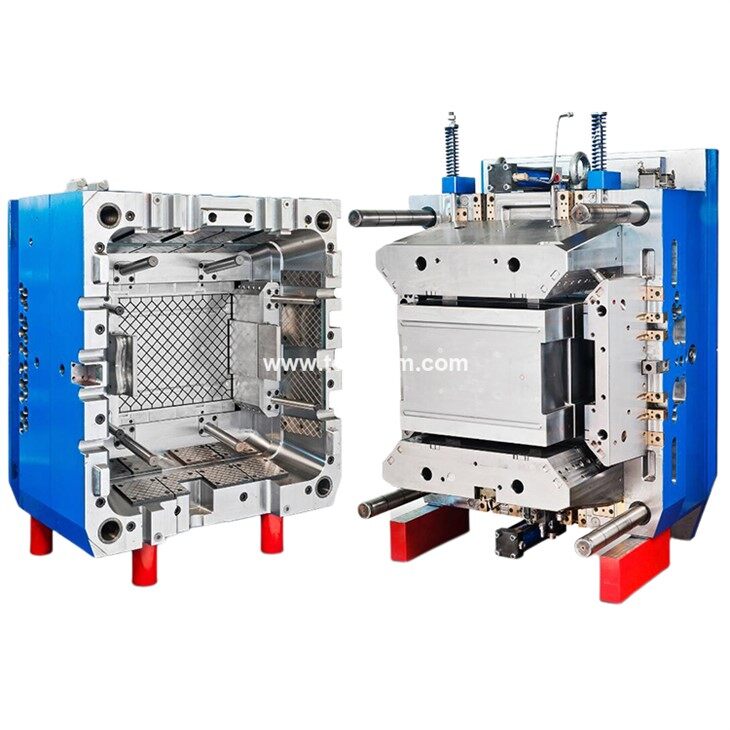
Examples of Electrical Plastics Injection Molding
Refrigerator Plastic Injection Mold
Description
Refrigerator Plastic Injection Mold is a mold specially used to manufacture refrigerator plastic parts. In the injection molding process, this mold injects molten plastic into the mold cavity under high pressure, and after the plastic cools and solidifies, a refrigerator plastic part consistent with the designed mold cavity shape is formed.
Benefits
- High production efficiency: The injection molding process has the characteristics of short molding cycle, which can greatly improve production efficiency. In the production of refrigerator plastic parts, the injection mold can quickly complete the melting, injection, cooling and demolding process of plastic, and realize efficient and continuous production.
- Accurate size: The injection mold can ensure the accurate size of the refrigerator plastic parts and meet the strict requirements of product design. This is essential to ensure the overall performance and appearance quality of the refrigerator.
- High surface quality: The injection molding process can obtain plastic parts with smooth surface and no defects. In refrigerator manufacturing, this helps to improve the overall aesthetics and durability of the product.
- Wide range of adaptability: Injection molds can be applied to a variety of plastic materials, including thermoplastics and thermosetting plastics. This provides more material options for refrigerator manufacturing and helps to meet the performance requirements of different parts.
- Design flexibility: The injection mold can be flexibly adjusted and optimized according to the needs of product design. In refrigerator manufacturing, this helps to realize the production of plastic parts with complex shapes and structures, and improve the overall performance and function of the product.
- Easy to automate: The injection molding process can be combined with an automated production line to realize automated control of the production process. This helps to reduce manual intervention and improve production efficiency and stability.
Function
- Production of refrigerator plastic parts: The most direct and main use of refrigerator plastic injection molds is to produce various plastic parts for refrigerators.
- Improve production efficiency: Injection molds can achieve rapid melting, injection and cooling and solidification of plastics, thereby greatly improving production efficiency. In refrigerator manufacturing, this means shorter production cycles and faster delivery speeds, which helps companies respond quickly to market demand.
- Ensure product quality: Injection molds can ensure that the plastic parts of refrigerators have precise dimensions, smooth surfaces, good physical properties and weather resistance. These characteristics are essential to ensuring the overall performance and appearance quality of refrigerators.
Air Conditioner Plastic Products
Description
Air conditioning plastic products refer to various parts and accessories related to air conditioning equipment made of plastic materials. These products have been widely used in the air conditioning manufacturing industry due to their light weight, corrosion resistance, and easy processing and molding.
Benefits
- Durability: Air conditioning plastic products are usually made of high-quality plastic materials, which have good weather resistance and corrosion resistance, and can withstand the test of long-term use and various environmental conditions.
- Lightweight: Plastic materials are relatively light, which makes air conditioning plastic products light in weight and easy to install, transport and maintain.
- Flexibility: The application of manufacturing technologies such as injection molds enables air conditioning plastic products to easily achieve various complex shapes and structural designs to meet diverse market needs.
- Accuracy: Manufacturing processes such as injection molding can ensure the accuracy of product dimensions and improve the overall quality and performance of the product.
- Sound insulation performance: Some plastic materials have excellent sound insulation effects, which can reduce the noise during air conditioning operation and improve user comfort.
Types
- Shell and panel: The shell and panel of the air conditioner are the parts that the user directly contacts, and they need to have good appearance quality and durability. Plastic materials are often used to produce the shell and panel of the air conditioner because of their good formability and strong surface decoration.
- Air duct and wind wheel: The air duct and wind wheel of the air conditioner are key components for air circulation, and they need to have good air tightness and wear resistance. Plastic materials are ideal for producing these parts because of their easy processing and low cost.
- Filter and filter bracket: The filter of the air conditioner is used to filter dust and impurities in the air and protect the internal components of the air conditioner from pollution. The filter bracket is used to support the filter to ensure its stable operation. These parts are also often made of plastic materials.
- Connecting pipe and drain pipe: The connecting pipe of the air conditioner is used to connect the indoor unit and the outdoor unit, and the drain pipe is used to discharge the condensed water generated by the air conditioner. Some connecting pipes and drain pipes are also made of plastic materials to reduce weight and reduce costs.
- Remote control and control panel: The remote control and control panel of the air conditioner are the main tools for users to operate the air conditioner. These parts not only require exquisite appearance and convenient operation, but also need to have good durability and stability. Plastic materials are often used to produce the housings and buttons of these components because of their flexible processing and low cost.
Washing Machine Casing Mold
Description
Washing Machine Casing Mold is a specialized mold used to produce washing machine casings. These molds are usually made of metal and are designed with a cavity that corresponds to the shape of the washing machine casing to ensure that the produced casing has a precise size and shape.
Benefits
- High production efficiency: Injection molds can achieve rapid melting, injection and cooling and solidification of plastics, thereby greatly improving production efficiency.
- Accurate dimensions: Injection molds can ensure that the dimensions of the washing machine shell parts are accurate and meet design requirements. This helps to ensure the overall structural stability and sealing of the washing machine.
- High surface quality: The injection molding process can obtain plastic parts with smooth surfaces and no defects, which improves the beauty and durability of the washing machine shell.
- Design flexibility: Injection molds can produce plastic parts of various complex shapes to meet the diverse needs of washing machine shell design. For example, the washing machine shell may need to contain complex structures such as curves and grooves, and injection molds can easily realize these designs.
Application
- Washing machine manufacturing industry: Washing machine shell molds are an indispensable tool in the washing machine manufacturing industry, used to produce washing machine shells of various models and specifications.
- Home appliance parts manufacturing: In addition to washing machine shells, molds can also be used to produce plastic parts for other home appliance products, such as refrigerator door panels, air conditioner shells, etc.
Frequently Asked Questions
We're professional electrical plastics injection molding manufacturers and suppliers in China, specialized in providing high quality customized service. We warmly welcome you to buy high-grade electrical plastics injection molding at low price from our factory.
electrical cable connector plastic injection molding, electrical cable tray support plastic injection molding, injection molding for electrical plastic slots