

Hey there! I'm from an ABS plastic automotive supplier, and today I wanna chat about something that's super relevant in our industry: the limitations of using ABS plastic in automotive manufacturing.
ABS, or Acrylonitrile Butadiene Styrene, is a widely - used thermoplastic polymer in the automotive world. It's got a bunch of great properties that make it a top choice for many car parts. For starters, it's known for its high impact resistance. This means that parts made from ABS can withstand bumps and knocks without cracking or breaking easily. It also has good dimensional stability, which is crucial for parts that need to fit precisely in the car's structure. And let's not forget its aesthetic appeal. ABS can be easily molded into different shapes and can be finished to have a smooth, shiny surface, which is important for the overall look of the vehicle.
But, like everything else, ABS plastic isn't without its limitations. One of the major drawbacks is its poor heat resistance. ABS starts to deform at relatively low temperatures compared to some other engineering plastics. In a car, there are areas that can get really hot, like near the engine or exhaust system. If ABS parts are placed in these high - heat zones, they can warp, which not only affects their appearance but also their functionality. For example, a plastic part near the engine bay that warps due to heat might not fit properly anymore, leading to potential leaks or other mechanical issues.
Another limitation is its chemical resistance. ABS can be affected by certain chemicals. In an automotive environment, cars are exposed to all sorts of fluids, such as gasoline, oil, and cleaning agents. Some of these chemicals can cause ABS to swell, crack, or lose its strength over time. For instance, if an ABS plastic fuel line comes into contact with gasoline for an extended period, it might start to degrade, posing a safety risk.
UV resistance is also a concern when using ABS in automotive manufacturing. The sun's ultraviolet rays can cause the surface of ABS parts to become brittle and discolored. This is especially noticeable on exterior car parts. Over time, the constant exposure to sunlight can make the ABS parts look faded and worn out. If you've ever seen an old car with a plastic bumper that looks chalky and cracked, it could be due to the lack of UV resistance in the ABS material.
In terms of mechanical strength at extreme conditions, ABS might not be the best option. While it has good impact resistance under normal circumstances, in very cold temperatures, its impact strength can decrease significantly. In cold climates, an ABS part that would normally withstand a small impact might crack easily. This can be a problem for cars that are used in regions with harsh winters, as the risk of damage to ABS parts during minor collisions or impacts increases.
Now, let's talk about the environmental aspect. ABS is a petroleum - based plastic, which means it's derived from non - renewable resources. With the growing focus on sustainability in the automotive industry, the use of non - renewable plastics like ABS is becoming a point of concern. Additionally, recycling ABS can be a bit tricky. The recycling process requires specific equipment and conditions, and not all recycling facilities are equipped to handle ABS properly. This can lead to a significant amount of ABS waste ending up in landfills.

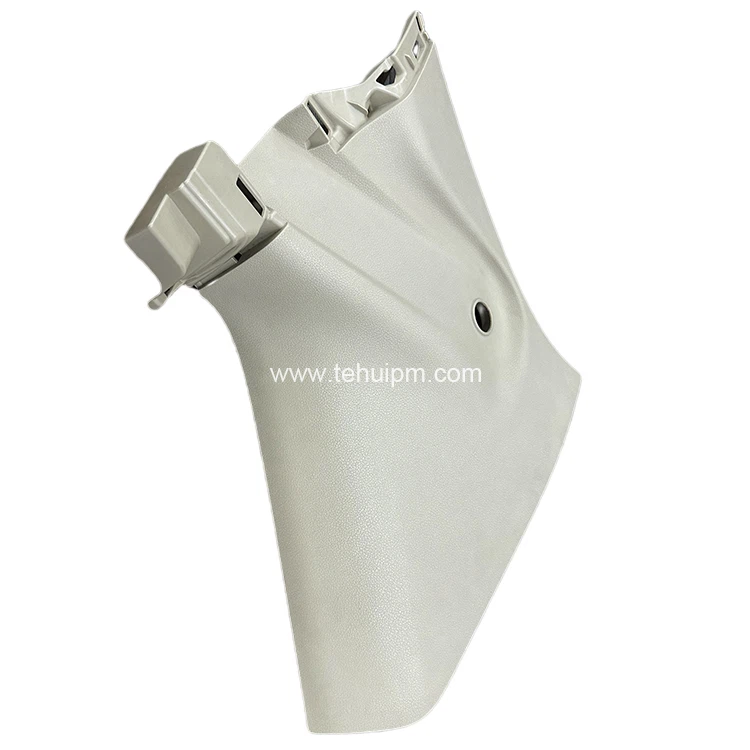
Despite these limitations, ABS still has its place in automotive manufacturing. It's cost - effective compared to some high - performance plastics, and it can be used in many non - critical applications. For example, it's commonly used for interior car parts like dashboard components, door panels, and center consoles. These parts are not exposed to extreme heat, chemicals, or harsh environmental conditions, so the limitations of ABS are less of a concern.
If you're in the market for automotive plastic parts, we've got a wide range of options. You can check out our Automobile Parts page to see what we offer. We also have a great selection of Plastic Car Parts that are made with high - quality ABS. And if you're interested in the manufacturing process, our Bumper Beam Plastic Mould page provides more details.
If you think our ABS plastic automotive parts could be a good fit for your needs, don't hesitate to reach out for a procurement discussion. We're always happy to talk about how we can meet your specific requirements and work around the limitations of ABS to provide you with the best possible products.
References:
- "Plastics in Automotive Applications" - A technical report on the use of plastics in the automotive industry, highlighting the properties and limitations of different plastics including ABS.
- "Environmental Impact of Plastics in Automotive Manufacturing" - A research paper discussing the sustainability aspects of using various plastics in cars, including ABS.
- Industry manuals and guides on automotive materials and their performance under different conditions, which provide insights into the behavior of ABS in automotive applications.