

Hey there! As a custom injection supplier, I've seen firsthand how crucial cooling time can be for custom injection parts. In this blog, I'll share with you the effects of cooling time on these parts and why it matters so much in our industry.
What is Cooling Time in Custom Injection?
Before we dive into the effects, let's quickly talk about what cooling time actually is. When we're doing custom injection molding, we melt plastic pellets and inject them into a mold cavity. Once the plastic is in the mold, it needs to cool down and solidify to take the shape of the mold. The time it takes for the plastic to cool from its molten state to a solid state is called the cooling time.
Effects on Part Quality
Dimensional Accuracy
One of the most significant effects of cooling time is on the dimensional accuracy of the custom injection parts. If the cooling time is too short, the plastic won't have enough time to fully solidify. As a result, the part may shrink unevenly when it's ejected from the mold. This uneven shrinkage can lead to parts that are out of spec, with dimensions that don't match the design requirements.
For example, if you're making Plastic Parts for Electronic Products, even a small deviation in dimensions can cause fitment issues. The parts might not fit properly into the electronic device, which can affect its performance and reliability.
On the other hand, if the cooling time is too long, it can also have a negative impact. Prolonged cooling can cause the plastic to become overly rigid and brittle. This can lead to cracking or warping of the part, especially if there are any internal stresses in the material.
Surface Finish
Cooling time also plays a big role in the surface finish of the custom injection parts. When the plastic cools quickly, the surface may form a rough or uneven texture. This is because the rapid cooling can cause the plastic molecules to solidify in a haphazard way, resulting in a less smooth surface.
For high - end products or parts where aesthetics matter, such as Home Use Plastic Items, a poor surface finish can be a deal - breaker. Customers expect these items to have a smooth and polished look, and a rough surface can make the product seem cheap and of low quality.
A proper cooling time allows the plastic to solidify gradually, which helps in achieving a smooth and consistent surface finish. This is especially important for parts that will be visible or in contact with the user, as a good surface finish not only looks better but also feels better.
Internal Stress
Another important aspect affected by cooling time is the internal stress within the custom injection parts. When the plastic cools too fast, it can trap internal stresses in the material. These internal stresses can cause the part to warp or crack over time, even after it has been removed from the mold.
For instance, in Custom Mold Making, parts with high internal stresses can be a nightmare. They may not perform as expected in the mold, and the stress can also affect the longevity of the mold itself. By controlling the cooling time, we can minimize these internal stresses and ensure that the parts are more stable and durable.
Effects on Production Efficiency
Cycle Time
Cooling time is a major component of the overall cycle time in custom injection molding. The cycle time is the time it takes to complete one full cycle of the injection molding process, from the moment the plastic is injected into the mold to the moment the finished part is ejected.
If the cooling time is too long, the cycle time will increase significantly. This means that we can produce fewer parts in a given amount of time, which can lead to lower productivity and higher costs. On the other hand, if we try to reduce the cooling time too much to speed up production, we run the risk of producing defective parts, as we've discussed earlier.
Finding the right balance in cooling time is essential for optimizing the production efficiency. By fine - tuning the cooling time, we can ensure that we're producing high - quality parts at a reasonable rate.

Energy Consumption
The cooling process also has an impact on energy consumption. Longer cooling times usually require more energy to maintain the cooling system. For example, if we're using water - cooled molds, more water needs to be circulated for a longer period of time, which consumes more energy.
As a custom injection supplier, we're always looking for ways to reduce energy consumption without sacrificing part quality. By optimizing the cooling time, we can not only save on energy costs but also make our production process more environmentally friendly.
Factors Affecting Cooling Time
Material Type
Different types of plastics have different cooling requirements. Some plastics cool and solidify faster than others. For example, thermoplastics like polyethylene have a relatively fast cooling rate compared to more complex engineering plastics like polycarbonate.
When we're working on a custom injection project, we need to take into account the material type and adjust the cooling time accordingly. Using the wrong cooling time for a particular material can lead to all the quality issues we've discussed earlier.
Part Thickness
The thickness of the custom injection part also affects the cooling time. Thicker parts take longer to cool because there's more plastic material that needs to lose heat. If we try to cool a thick part too quickly, the outer layer may solidify while the inner core is still molten. This can lead to internal voids and uneven cooling, which can compromise the part's quality.
On the other hand, thinner parts cool more quickly. However, we still need to be careful not to cool them too fast, as this can also cause problems like surface roughness and internal stress.
Mold Design
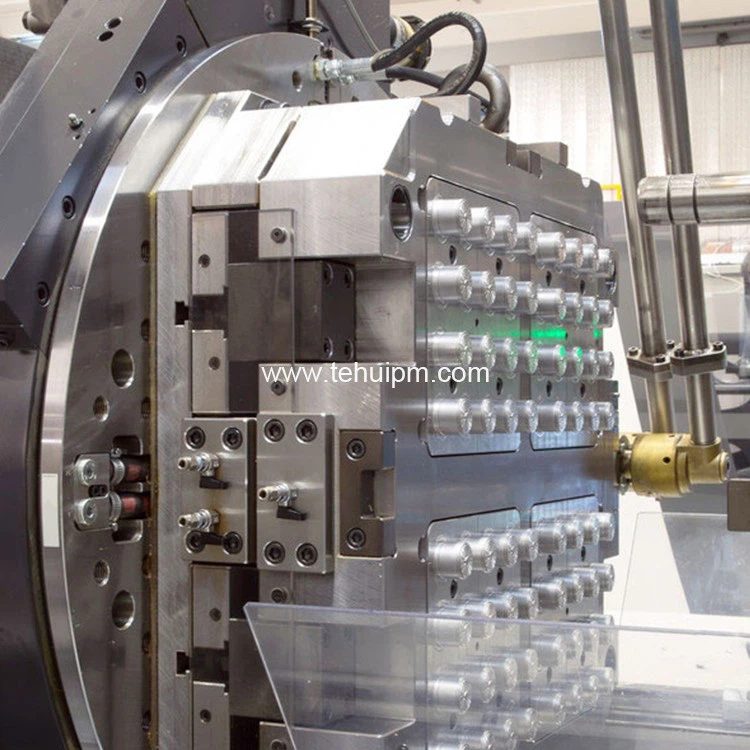
The design of the mold can have a significant impact on the cooling time. A well - designed mold will have an efficient cooling system that can evenly distribute the cooling medium (such as water) around the mold cavity. This helps to ensure that the plastic cools uniformly and reduces the overall cooling time.
For example, if the mold has poor cooling channels or if the cooling channels are blocked, the cooling process will be inefficient, and the cooling time will increase. Additionally, the shape of the mold cavity can also affect how the plastic cools. Complex shapes may require more time to cool properly.
Optimizing Cooling Time
To optimize the cooling time for custom injection parts, we use a combination of techniques and technologies. First, we conduct thorough material testing to understand the cooling characteristics of the plastic we're using. This allows us to set a baseline for the cooling time.
We also invest in advanced mold design and manufacturing. Our Custom Mold Making team uses the latest software and techniques to design molds with efficient cooling channels. This helps to ensure that the plastic cools evenly and quickly.
In addition, we use real - time monitoring systems to track the temperature of the mold and the plastic during the cooling process. This allows us to make adjustments to the cooling time as needed, based on the actual conditions in the mold.
Conclusion
As you can see, cooling time has a profound impact on custom injection parts. It affects the quality, production efficiency, and overall cost of the parts. As a custom injection supplier, we understand the importance of getting the cooling time right.
Whether you're in need of Plastic Parts for Electronic Products, Home Use Plastic Items, or any other custom injection parts, we're here to provide you with high - quality products. If you're interested in working with us, feel free to reach out for a procurement discussion. We're ready to collaborate and meet your custom injection needs.
References
- "Injection Molding Handbook" by O. Olajide
- "Plastic Materials and Processing" by James F. Carley