

Yo, I'm a guy running a Plastic Container Mold supply business, and let me tell you, making molds for thin-walled plastic products is no walk in the park. There are a bunch of challenges that we face on a regular basis, and I'm gonna spill the beans about them today.
One of the biggest headaches is achieving the right wall thickness consistency. Thin-walled products are, well, thin. You need that wall to be just the right thickness all around. But when you're injecting molten plastic into the mold, it doesn't always flow evenly. Sometimes it might cool down faster in one area than another, causing uneven wall thickness. This can lead to weak spots in the final product. If a customer uses a thin-walled plastic container with inconsistent wall thickness, it could crack or break easily. And that's a big no-no for us as suppliers. We've had projects where we've spent hours tweaking the mold design and adjusting the injection parameters to get that perfect consistency. It's like trying to hit a bullseye every single time.
Another major challenge is dealing with the shrinkage of the plastic. After the plastic is injected into the mold and cools down, it shrinks. Now, with thin-walled products, the shrinkage can be even more tricky to manage. The shrinkage rate can vary depending on the type of plastic we're using. For example, some plastics might shrink more than others, and if we don't account for that in the mold design, the final product won't fit the specifications. We have to do a lot of testing and calculations to predict how much the plastic will shrink. It's like a science experiment, but with high stakes. If we get the shrinkage prediction wrong, we end up with products that are either too small or have a distorted shape.
The cooling process is also a real pain in the neck. Since thin-walled products have less material, they cool down faster. But we still need to make sure the cooling is uniform. If one part of the mold cools down too quickly compared to the rest, it can cause warping. Warped products are useless, and we can't send them to our customers. We've invested in some high - tech cooling systems to try and control the cooling process better. These systems circulate coolant through the mold at a specific rate and temperature. But even with the best systems, it's still a challenge to get that perfect cooling. Sometimes, we have to make adjustments to the mold's cooling channels, which can be time - consuming and costly.
Now, let's talk about the material selection. Choosing the right plastic for thin-walled products is crucial. We need a plastic that can flow easily into the mold cavities, especially when the walls are thin. Some plastics are more viscous than others, and if we pick a plastic that's too thick to flow smoothly, it can cause defects in the final product. On the flip side, if the plastic is too thin, it might not have the strength and durability that our customers need. We often work closely with our plastic suppliers to find the best match. It's all about finding that sweet spot between flowability and strength.
In addition, the wear and tear on the molds is a significant issue. Thin-walled products often require high - pressure injection to ensure the plastic fills all the nooks and crannies of the mold. This high pressure can take a toll on the mold over time. The constant friction and pressure can cause the mold's surface to wear down. We need to regularly inspect and maintain our molds to keep them in good condition. Otherwise, the quality of the products will start to decline. We use special coatings on the molds to try and reduce the wear, but it's still an ongoing battle.
Another aspect is the cost factor. Developing molds for thin-walled products can be quite expensive. The design and manufacturing process requires a lot of precision and expertise. We need to use high - quality materials for the molds to ensure they can withstand the high pressures and the repeated use. The testing and adjustment phase also adds to the cost. And let's not forget about the research we do to keep up with the latest technologies and materials. All these costs are passed on to the customers to some extent, but if the price is too high, it can make our products less competitive in the market.
Now, I know all these challenges might sound a bit daunting, but don't worry. We've been in this business for a long time, and we've developed a lot of strategies to overcome them. We have a team of experts who are constantly working on improving our processes.
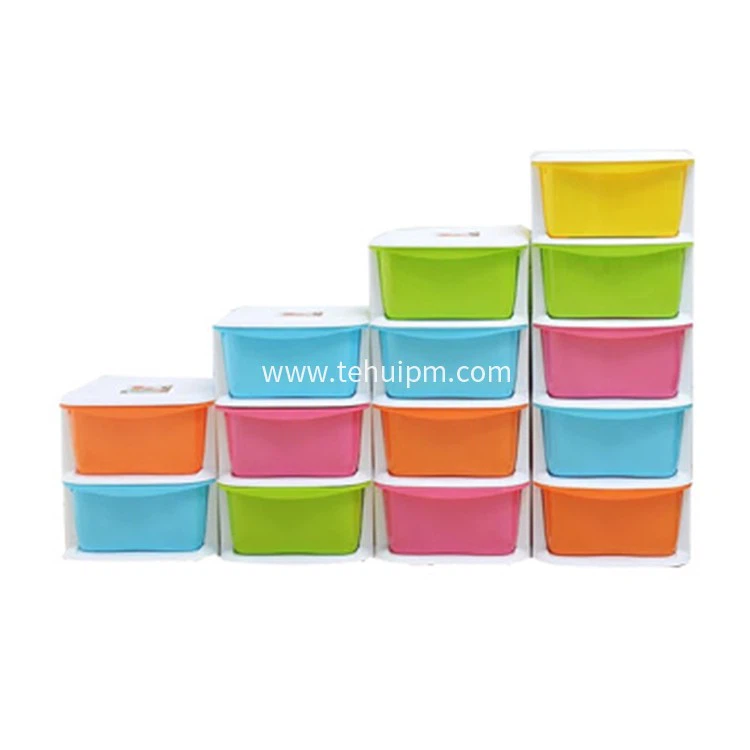
If you're in the market for plastic container molds, whether it's for Pvc Household Items, Drawer Mold, or Plastic Tub Mold, we're here to help. We can offer you high - quality molds that are designed to meet your specific requirements. Our experience in dealing with the challenges of thin - walled products means that we can provide you with reliable solutions.
So, if you're interested in working with us, don't hesitate to reach out. We're always open to having a chat about your needs and how we can help you get the best plastic container molds for your thin - walled products.
References

- Plastic Injection Molding Handbook, by Dominick V. Rosato, Donald V. Rosato, and Michael G. Rosato
- Fundamentals of Plasticating Screws and Barrels, by James F. Carley